









employee from 01.01.2025 until now
Moskva, Russian Federation
Malahovka, Moscow, Russian Federation
VAK Russia 3.1.33
VAK Russia 5.8.5
UDC 796.332
UDC 004.8
UDC 612.766
CSCSTI 77.00
CSCSTI 20.00
Russian Classification of Professions by Education 02.00.00
Russian Classification of Professions by Education 32.00.00
Russian Library and Bibliographic Classification 22
Russian Library and Bibliographic Classification 58
Russian Library and Bibliographic Classification 75
BISAC COM018000 Data Processing
BISAC COM004000 Intelligence (AI) & Semantics
BISAC SPO015000 Football
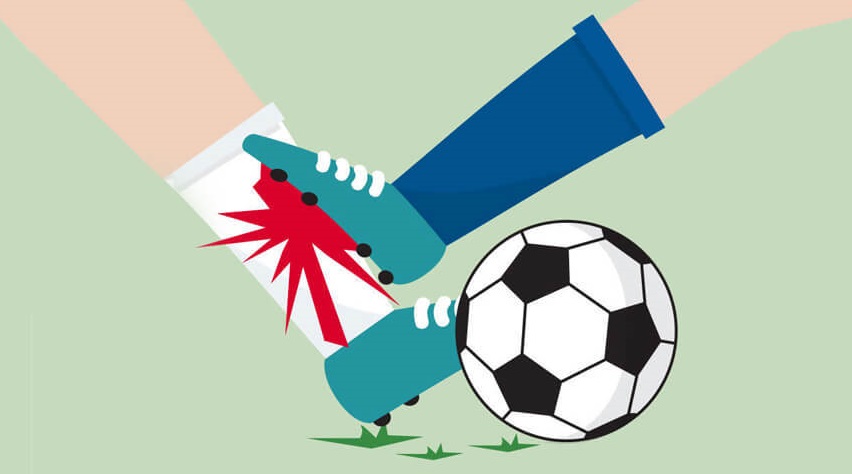
The aim of this work is to provide an overview of the modern applications of artificial intelligence (AI) in professional sports, using football as an example. We will discuss modern approaches to injury prediction and the requirements for implementing these systems in a club setting. The methodology includes a scoping review of publications from 2015 to 2025 in the fields of sports medicine, sports science, and computer vision, as well as an analysis of industry standards for data quality. As a result, key classes of AI tasks have been systematized, including tracking, scouting, and decision support by headquarters. Typical data and model architectures have been identified, as well as critical sources of information bias and leakage. Requirements for validation and implementation have also been highlighted. It has been demonstrated that injury risk models in football show potential in prospective studies with high-quality «time-loss» labeling and strict time partitioning. However, their practical value depends not only on AUC, but also on calibration, resistance to data drift, and integration into the training process and recovery measures. The practical significance of the results is in the development of a practical framework for creating an «AI club system». This includes standardizing data, creating an ethical and legal framework, selecting metrics, establishing a monitoring protocol, and developing a set of preventive measures supported by models. The value of this work lies in its focus on sports scientists, analysts, and coaching staff, as well as its emphasis on the reproducibility and risk management of AI implementation.
artificial intelligence, football, injury prediction, load monitoring, tracking data, machine learning, model explainability, scouting, decision support, generative agents
1. López-Valenciano A., Ruiz-Pérez I., Garcia-Gómez A., Vera-Garcia F.J., De Ste Croix M., et al. Epidemiology of injuries in professional football: a systematic review and meta-analysis. British Journal of Sports Medicine, 2020, 54 (12), pp. 711–718. https://doi.org/10.1136/bjsports-2018-099577
2. Bengtsson H., Hägglund M., Ekstrand J., Hallén A., Waldén M. No major changes in injury incidence in European club football during the 2022/23 FIFA World Cup season: a subanalysis of the UEFA Elite Club Injury Study. BMJ Open Sport and Exercise Medicine, 2025, 11 (3), e002772. https://doi.org/10.1136/bmjsem-2025-002772
3. Ekstrand J., Waldén M., Hägglund M. Hamstring injuries have increased by 4% annually in men's professional football, since 2001: a 13-year longitudinal analysis of the UEFA Elite Club Injury Study. British Journal of Sports Medicine, 2016, 50 (12), pp. 731–737. https://doi.org/10.1136/bjsports-2015-095359
4. Ekstrand J., Spreco A., Bengtsson H., Bahr R. Injury rates decreased in men's professional football: an 18-year prospective cohort study of almost 12 000 injuries sustained during 1.8 million hours of play. British Journal of Sports Medicine, 2021, 55 (19), pp. 1084–1091. https://doi.org/10.1136/bjsports-2020-103159
5. Hägglund M., Waldén M., Magnusson H., Kristenson K., Bengstton H., Ekstrand J. Injuries affect team performance negatively in professional football: an 11-year follow-up of the UEFA Champions League injury study. British Journal of Sports Medicine, 2013, 47 (12), pp. 738–742. https://doi.org/10.1136/bjsports-2013-092215
6. FIFA. Electronic Performance and Tracking Systems (EPTS) / FIFA Quality Programme. 2025. URL: fifa.com/technical/football-technology/standards/epts
7. Theiner J., Gritz W., Müller-Budack E., Rein R., Memmert D., Ewerth R. Extraction of positional player data from broadcast soccer videos. In: Proceedings of the IEEE/CVF Winter Conference on Applications of Computer Vision (WACV), 2022, pp. 1463–1473. https://doi.org/10.1109/WACV51458.2022.00153
8. Bassek M., Rein R., Weber H., Memmert D. An integrated dataset of spatiotemporal and event data in elite soccer. Scientific Data, 2025, 12 (1), 195. https://doi.org/10.1038/s41597-025-04505-y
9. Yeung C., Ide K., Someya T., Fujii K. OpenSTARLab: open approach for spatio-temporal agent data analysis in soccer. Complex & Intelligent Systems, 2025, 11, 342. https://doi.org/10.1007/s40747-025-01965-y
10. Hulin B.T., Gabbett T.J., Lawson D.W., Caputi P., Sampson J.A. The acute:chronic workload ratio predicts injury: high chronic workload may decrease injury risk in elite rugby league players. British Journal of Sports Medicine, 2016, 50 (4), pp. 231–236. https://doi.org/10.1136/bjsports-2015-094817
11. Impellizzeri F.M., Tenan M.S., Kempton T., Novak A., Coutts A.J. Acute:chronic workload ratio: conceptual issues and fundamental pitfalls. International Journal of Sports Physiology and Performance, 2020, 15 (6), pp. 907–913. https://doi.org/10.1123/ijspp.2019-0864
12. Gabbett T.J. The training--injury prevention paradox: should athletes be training smarter and harder? British Journal of Sports Medicine, 2016, 50 (5), pp. 273–280. https://doi.org/10.1136/bjsports-2015-095788
13. Martins F., Sarmento H., Gouveia É.R., Saveca P., Przednowek K. Machine learning-based prediction of muscle injury risk in professional football: a four-year longitudinal study. Journal of Clinical Medicine, 2025, 14 (22), 8039. https://doi.org/10.3390/jcm14228039
14. Wang Z., Veličković P., Hennes D., Tomašev N., Prince L., et al. TacticAI: an AI assistant for football tactics. Nature Communications, 2024, 15 (1), 1906. https://doi.org/10.1038/s41467-024-45965-x
15. Zhou D., Keogh J.W.L., Ma Y., Tong R.K.Y., Khan A.R., Jennings N.R. Artificial intelligence in sport: A narrative review of applications, challenges and future trends. Journal of Sports Sciences, 2025, 1–16. https://doi.org/10.1080/02640414.2025.2518694
16. Wang Y., Lee S. Development and validation of a machine learning model for non-contact injury prediction based on lower limb strength asymmetry in professional football. Scientific Reports, 2026, 16, 4456. https://doi.org/10.1038/s41598-025-34468-4
17. Bowen L., Gross A.S., Gimpel M., Li F.X. Accumulated workloads and the acute:chronic workload ratio relate to injury risk in elite youth football players. British Journal of Sports Medicine, 2017, 51 (5), pp. 452–459. https://doi.org/10.1136/bjsports-2016-096547
18. Pietraszewski P., Terbalyan A., Roczniok R., Maszczyk A., Ornowski K., et al. The role of artificial intelligence in sports analytics: a systematic review and meta-analysis of performance trends. Applied Sciences, 2025, 15 (13), 7254. https://doi.org/10.3390/app15137254
19. Li W., Liu M., Liu J., Zhang B., Yu T., Guo Y., Dai Q. A review of artificial intelligence for sports: Technologies and applications. Intelligent Sports and Health, 2025, 1 (3), pp. 113–126. https://doi.org/10.1016/j.ish.2025.05.001
20. Pomerantsev A.A., Upolovneva A.A. Artificial intelligence in sport and physical culture: trends, threats and adaptation to the new reality. Human. Sport. Medicine, 2024, 24 (2), pp. 137–144. https://doi.org/10.14529/hsm24s221 EDN: https://elibrary.ru/BLQHWJ (in Russ.)